
National Film Board of Canada (NFB)
1939–Present
Email us to revise your entry or request it to be deleted.

The acronyms "ONF" and "NFB" appear in vertical text on the left. The NFB logo, featuring a large eye atop a torso in the negative space of a box, appears on the right.

Images

Description
Works in catalogue
-
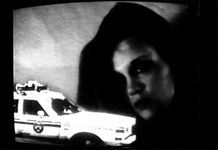
Prowling By Night
film/video, 1990
Produced as part of the National Film Board’s Five Feminist Minutes, this collaborative work between Gwendolyn and fellow sex trade workers is an examination of police harassment, safe sex education and sex worker’s rights. Well received by the public and the critics, the film also won the award for Best First Short Film at La Mondiale de films et vidéos réalisés par des femmes in April 1991.
-

In the Flesh
film/video, 2000
-
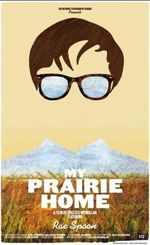
My Prairie Home
film/video, 2013
In this feature documentary-musical by Chelsea McMullan, indie singer Rae Spoon takes us on a playful, meditative and at times melancholic journey. Set against majestic images of the infinite expanses of the Canadian Prairies, the film features Spoon crooning about their queer and musical coming of age. Interviews, performances and music sequences reveal Spoon’s inspiring process of building a life of their own, as a trans person and as a musician.
-
Niish Manidoowag (Two-Spirited Beings)
film/video, 2017
Long before the settlers arrived to Turtle Island (aka North America), there existed a Two Spirit Society in many tribal communities. The Two Spirited people were revered and treated with respect and equality. They were sought for their wisdom, healing and visions. Once a child had reached the age of puberty, a special ceremony was held. The child would enter a lodge, and pick either a basket or a bow. The item chosen helped to provide guidance on whether the feminine or masculine role would be the path followed. The Two Spirit Society was quickly abolished with the arrival of settlers. The Two Spirit Society has been revived… Niish Manidoowag speaks to the real issues that transgender youth encounter in their life’s journey. We honour all LGBQT peoples everywhere. Directed by Debbie Mishibinijima, an Odawa/Potawatomi woman from Wiikwemkoong Unceded Territory (Manitoulin Island, Ontario). The name of this film is in Anishinaabemowin, translated to English, it means Two-Spirited Beings.
-
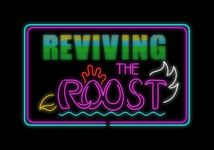
Reviving the Roost
film/video, 2019
Filmmaker and bestselling author Vivek Shraya's ode to a popular Edmonton gay bar that closed in 2007. With pulsating neon-light animation, Reviving the Roost is a story about community complexity and longing, and an elegy to a lost space.
-

Woman Dress
film/video, 2019
Pre-contact, a Two Spirit person named Woman Dress travels the Plains, gathering and sharing stories. Featuring archival images and dramatized re-enactments, this film shares a Cuthand family oral story, honouring and respecting Woman Dress without imposing colonial binaries on them.
-

Any Other Way: The Jackie Shane Story
film/video, 2024
A star is reborn. With an outsize stage presence that eclipsed R&B greats like Etta James and Little Richard, Black trans soul singer Jackie Shane was the real deal. After mysteriously vanishing from public view for almost 40 years, this little-known icon is given her ultimate due in Michael Mabbott and Lucah Rosenberg-Lee’s remarkable documentary portrait Any Other Way: The Jackie Shane Story, executive produced by Elliot Page. In an era when voices like hers were silenced and marginalized, Jackie blazed an incandescent trail from her native Nashville to the top of the charts in 1960s Toronto, where she ruled the nightclub scene. With few recordings of her legendary performances, this film brings Jackie to life in her own words through never-before-heard phone conversations, dazzling rotoscope animation and a newly released song, part of an incredible soundtrack that seals Jackie’s place as one of the greatest soul performers of the 20th century. The full scope of her extraordinary life and career is an epic journey, marked by family secrets, loss and love. From standing down the mob to telling off Ed Sullivan, Jackie lived as her most authentic self through talent, courage and an unbreakable commitment to truth. But on the eve of her return to the stage, fate had other plans. In Any Other Way, Jackie finally gets her second act. Or in her own words: “Oh, Honey! When it comes to Jackie, look out!”
Email us to revise your entry or request it to be deleted.