
Frameline Distribution
1977–Present
Email us to revise your entry or request it to be deleted.

Description
Works in catalogue
-

Tricia’s Wedding
film/video, 1971
Anticipating the present-day practice of up-to-the-minute political satire as seen on SNL, The Daily Show, and Last Week Tonight, the world-famous Cockettes — including disco superstar Sylvester — orchestrated a decidedly queer, hysterically funny send-up of the televised wedding of First Daughter Tricia Nixon on June 11, 1971. Come revel in psychedelic debauchery as you've never seen it before with a new pristine 4K remaster of Tricia’s Wedding. Restoration commissioned by Frameline and the OutFest UCLA Legacy Project and facilitated by the UCLA Film & Television Archive for the 50th anniversary of this queer cinema landmark.
-
Elevator Girls in Bondage
film/video, 1972
The underpaid “radical pervert” staff of a seedy hotel rises up in revolt, and by the time head elevator girl Maxine starts spouting union songs – “dump the bosses off your back!” – and Marxist maxims, you’ll be ready to join the cause of Elevator Girls in Bondage. Starring members of legendary genderfuck drag troupe the Cockettes/Angels of Light including the great Rumi Missabu (who passed away in April 2024) as Maxine, who organizes the Pussy Protection Club to fight back against lurking predators in the hotel.
-
The Salt Mines
film/video, 1990
Latino transvestites of the NYC streets support their daily lives through prostitution while living in garbage trucks.
-
Two-Spirit People
film/video, 1991
Interviews with Two-Spirit indigenous people explore the "Berdache" tradition of many indigenous cultures. The tape examines the role played by colonial writing about indigenous peoples in obscuring and distorting this tradition, and touches on the work of Two-Spirit peoples to reclaim traditional gender and sexuality roles.
-
Stafford's Story
film/video, 1992
Stafford recounts a memorable encounter at a sex club.
-
Lady
film/video, 1993
The exact identity of the redhead at the centre of Lady is hard to pin down. Is she a woman playing a man playing a woman, or more specifically, a lesbian playing a gay man playing a heterosexual woman? The juxtaposition of various cinematic styles in the film, from quasi 70s verite to home movies to a more distanced black and white, adds to the sense of a character continually redefining herself. This purposeful ambiguity - who is the lady in the red wig? - invites the audience to question the very parameters of sexuality, desire, and what it means to be a woman. Performing gender actor/writer Dominique Dibbell plays a range of received stereotypes of femininity from bruised victim of emotional neglect to penis envy, deconstructing the Lady of the title, in a disturbing series of sheddings and re-camouflaging in which her gender identity and sexuality transmute before your eyes.
-
Adam
film/video, 1995
Adam is an animated retrospective look at a primary school crush. Clay animation of a little girl who is mistaken for a boy and relishes the opportunity.
-
The Transformation
film/video, 1995
Documentary of Richardo (Sara in The Salt Mines) a former homeless prostitute TS [transsexual] living with HIV reforms to a Born Again Christian.
-
Chocolate Babies
film/video, 1996
As the AIDS epidemic nears the end of its second decade, director/writer Stephen Winter feels comfortable enough to give this grave disease a bizarre spin. In his fantasy underworld, a band of urban transvestite terrorists stage a series of headline-grabbing physical attacks against conservative politicians whom they believe are collecting lists of those infected to be used for some nefarious purpose. As one of their group infiltrates the office of a conservative politician, a closeted African-American city councillor, the story takes even more hysterical twists. The marauding band of drag guerrillas, all queens of color, include HIV-positive diva Max Mo-Freak, the nominal leader; his dying sister Jamela; Larva, a fat, bitchy pretentious cross-dresser; junkie transvestite Lady Marmalade; and Sam, a young Asian and Mo's sometimes lover, whose friendship with the queens has radicalized him. The story evolves around Sam going undercover in the politicians office to ferret out the alleged list.
-
Tomboy
film/video, 1999
A tomboy who grew up to be a force in pro sports.
-
Straightboy Lessons
film/video, 1999
A primer from a non-trans friend and a celebration of friendship.
-
Myth of Father
film/video, 2001
A son takes the news about his parent coming out as a transsexual, as an opportunity to discover who his father really is, and attempts to re-establish family bonds.
-
Junk Box Warrior
film/video, 2002
Based on a poem of the same title, Junk Box Warrior is an enchanting mesh of spoken word and black-and-white images over a haunting soundtrack. This film explores the alienation, frustration and fear of not fitting into society's gender binary.
-
transparent
film/video, 2005
Pink or blue. Male or Female. Mommy or Daddy. Categories that we all take for granted are blown wide open in transparent, a documentary film about 19 female-to-male transsexuals living in the United States who have given birth. transparent focuses on its subjects' lives as parents – revealing the diverse ways in which each person reconciles this part of their history now that they identify as male and are perceived by the world, but only sometimes by their children, as men. The first-person stories in transparent explain how changing ones gender is dealt with and impacts the relationships, if at all, within these families. The subjects resonate powerfully as parents and human beings dealing with issues like single parenthood, teen pregnancy and their children's emotional and physical development. But through these extraordinary men, the film challenges like never before, the ways that we relate to one another, particularly within our immediate families, based on gender.
-

The Joy of Life
film/video, 2005
Beautifully composed landscape shots of San Francisco juxtaposed with voiceover detailing the emotional intricacies of the love affairs of a butch lesbian and the history of Golden Gate Bridge as the world's prime suicide location.
-
Boy I Am
film/video, 2006
Delving into the heated debate between lesbian feminism and the struggles of transgendered persons for inclusion and acceptance, this film illuminates the polarization of queer communities. As the FTM community grows in size and visibility, some lesbians feel their women-only spaces are being undermined and their community changed. Boy I Am follows the final months before three New York City trans men undergo surgery and depicts them debating issues around space within queer communities. Each speaks poignantly about the roles of race, class and feminism in their lives and during their transitions. Drawing links between the right to choose and the right to accessible health care, they defend their place in the feminist movement while searching for acceptance within the queer community.
-
Trans Neptune
film/video, 2006
Trans Neptune is a sci-fi story like you've never seen before.
-
Enough Man
film/video, 2006
Documentary meets explicit sexuality in this groundbreaking 2005 feature-length film on body image, relationships, sex, and sexuality from the perspective of nine female-to-male (FTM) transmen and their partners. Featuring health educators, college students, sex workers, activists, and artists, Enough Man navigates the terrain between objectivity and personal identity, allowing viewers into some of the most personal and rarely discussed areas of transgender life.
-
The Believers
film/video, 2006
From the voices you least expect comes a message of redemption and hope. THE BELIEVERS is the story of the world’s first transgender gospel choir- their struggle for social change and the fight for recognition in the world of organised religion. Built around intimately told personal stories, the film portrays a group of people who are in tune with the universe. They challenge the catholic church and make changes to a social structure that nobody imagined possible. This film is about moving mountains. A really uplifting piece of Trans filmmaking and a pleasure for all ears.
-
One In 2000
film/video, 2006
One in 2000' explores intersex lives from a variety of perspectives and diverse voices. It reaches beyond the issues of gender and medical treatment to connect with a wider audience on the topics of family, school, and relationships. This moment in time is an historical crossroads in which doctors around the world are beginning to treat intersex not as a social emergency, but as the complex condition that it is.
-
Envisioning Justice
film/video, 2007
This documentary is about the life and work of Pauline Park. As an orphan born in Korea in a year of revolution, Pauline Park was adopted and raised in the Midwest. Park. She came out as an openly transgendered woman after moving to New York City in 1997. In June 1998, Park co-founded the New York Association for Gender Rights Advocacy (NYAGRA), the first statewide transgender advocacy organization in New York.
-
The Bond
film/video, 2007
"How could you raise a transsexual child and not know it?" In this honest and compassionate documentary, the father of a transsexual child shares his family's story - what it was like when his child came out, how their relationship has changed, and how their bond continues to get stronger.
-
Swimsuit
film/video, 2007
An emotional landscape of a young trans man who gets a panic attack every time he dons a female bathing suit. Calvin Gilbert at first appears to be a really cute boyish man, striking a pose that would win the hearts of fitness magazine editors everywhere. As Calvin unspools his traumas around quitting the Smith College women's swim team we see him hurtling through the water in full businessman's drag. There is the briefest glimpse of male naval hair - did I actually see that? This decidedly offbeat short is a visual poem to our fears and dreams of escaping the gender prison.
-
Trained In The Ways Of Men
film/video, 2007
At a party one night a brutal murder occurred when it was discovered that the cute young girl everyone was attracted too was anatomically male. This film tells the story of one families struggle and their never ending love that brought them all together to see justice done for Gwen, 17 years of age, who never had a chance, yet her spirit has touched the lives of people forever. Every year in November we have a day of rememberence so we don't forget the lives of so many trans people who have been lost tragically to transphobic crimes of violence. We close this festival in honour of Gwen Araujo and we thank Shelly Prevost for making such an important and brave film that will help dispel ignorance in this world.
-
Changing House
film/video, 2009
Rusty and Chelsea are a transgender lesbian couple who devoted 15 years to making their Brooklyn home a communal living space for transgender women in need and transgender civil rights organizers, including Stonewall legend Sylvia Rivera.
-
Make A Mate
film/video, 2009
A lonely woman is about to send a letter to her mom but then a new store, Make a Mate, magically appears. The storeowner ushers the woman inside and guides her to pick out the traits of a partner. The Mate Maker blends all the traits together and presents a wonderful creation.
-

Maggots and Men
film/video, 2009
This experimental historical narrative set in a mythologized version of revolutionary Russia reimagines the story of the 1921 uprising of the Kronstadt sailors and features the largest cast of trans actors in film history. A masterful homage to Sergei Eisenstein’s BATTLESHIP POTEMKIN, MAGGOTS AND MEN also deploys stylistic innovations reminiscent of Guy Maddin and Kenneth Anger. Agitprop theater group Blue Blouse guides the viewer through the story, which is narrated by fictionalized letters written by Stepan Petrichenko, the leader of the Provisional Revolutionary Committee.
-

Kate Bornstein is a Queer & Pleasant Danger
film/video, 2014
Transgender-dyke. Reluctant-Polyamorist. Sadomasochist. Recovering-Scientologist. Pioneering Gender Outlaw. Meet Auntie Kate. Trailblazing performance artist-theorist-activist, Kate Bornstein, takes us on a mind-bending quest through her world dismantling gender and seeking answers to the age-old question: What makes life worth living? Kate Bornstein is... captures rollicking public performances and painful personal revelations bearing witness to the pioneering gender outlaw who inhabits a space between male and female with wit, style, and astonishing candor. Frequenting 1990's day-time talk shows, Kate's book Gender Outlaw secured her place in history. While paving the way for generations of gender non-conforming people, she alienated others resulting in live protests and open letters going viral on the Internet. Increasingly, films narrate the personal lives and transitions of transgender people. Moving the genre forward, Kate Bornstein is... focuses on Kate's brilliant work and multiplicity of complicated identities. As she receives a grim cancer diagnosis, Kate confronts her own mortality and purpose in life, giving her own motto renewed urgency: "Do whatever it takes to make your life worth living. Just don't be mean." By turns meditative and playful, the film invites us on a thought-provoking journey through Kate's world seeking answers to some of our biggest questions.
-
Boy Meets Girl
film/video, 2014
Funny and provocative, Boy Meets Girl vividly captures the giddy excitement, sexual heat, and inherent heartache of “non-traditional” love in a small town. Ricky (Michelle Hendley) is a 21-year-old trans girl living in Kentucky. Her only real friend, straight-laced Robby, has been her trusty, totally platonic, confidant for over 15 years. Her day job slinging lattes is merely a stepping-stone toward her goal of being a famous New York designer. She’s confident, cool, and completely ready for something new—and then her world is transformed when an enchanting debutante saunters into her life. Triggering fresh feelings and experiences, this unlikely connection conjures up intense questions about identity while uncovering ghosts from Ricky’s past. Indie-film veteran Eric Schaeffer (My Life’s in Turnaround, If Lucy Fell) builds a compelling, compassionate world that focuses on the emotions and messy challenges of complex people navigating complicated relationships. Schaeffer creates a thoroughly authentic small-town atmosphere, capturing the cozy and claustrophobic ambiance of a place where everyone knows your name—and your sexual partners. Anchored by a stunning performance from newcomer Michelle Hendley, who crafts a raw, nuanced character that is strong and vulnerable at once, Boy Meets Girl is a sweetly profound romantic comedy about people who are misunderstood, searching, and, in the end, just like you and me. — Brendan Peterson
-

Happy Birthday, Marsha!
film/video, 2018
Happy Birthday, Marsha! is a film about iconic transgender artist and activist, Marsha "Pay it No Mind" Johnson and her life in the hours before she ignited the 1969 Stonewall Riots in New York City.
-
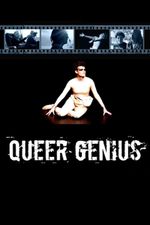
Queer Genius
film/video, 2019
Queer Genius is a cinematic exploration of four visionary queer artists breaking down barriers in their creative fields as they confront fame, failure, censorship, family, gender, and sexuality. The film embraces the communal possibilities of "genius" from a particularly queer perspective crossing genre and generational perspective. It features intertwined portraits of Eileen Myles, Barbara Hammer, Jibz Cameron, and Black Quantum Futurism.
-
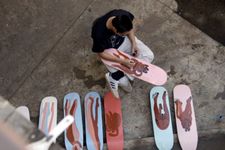
Carving Space
film/video, 2020
Follows the grassroots skateboarding organization, Unity and affiliated queer skate activists, including 2019 U.S.A. Olympic Skateboarding team member, Lacey Baker, as they provide spaces and voices to the often-overlooked queer community.
-
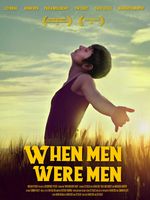
When Men Were Men
film/video, 2021
In a heavily religious Irish society a young actor struggling with gender identity has to let go of his idea of masculinity before he loses sight of who he is and those he loves.
-
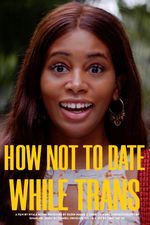
How Not to Date While Trans
film/video, 2022
A break-the-fourth-wall, dark comedy that follows the dating life of a black trans woman and the problematic men she meets along the way. Andie searches for romance and self-love but ends with heartbreak. How Not To Date While Trans premiered in 2022 and screened in over 30 festivals. It has won audience and best short awards at Newfest, InsideOut Toronto, Wicked Queer, and Translations Seattle Transgender Film Festival.
-

Mutt
film/video, 2023
Feña, a young trans guy bustling through life in New York City, is afflicted with an incessantly challenging day that resurrects ghosts from his past. Laundromats, subway turnstiles, and airport transfers are the hectic background to this emotional drama that overlaps past, present, and future. Settling the disharmony of transitional upheaval in relationships familial, romantic, and platonic is Feña’s task at hand, and his resulting juggling act is equal parts skillful, fumbling, and honest. The poignant moments he finds between himself and others – as the distance between them closes – are warm, true, and touching. Vuk Lungulov-Klotz’s directorial debut is, at once, precise and wholly relatable in its grand humanity. A visceral lead performance by Lío Mehiel embodies inbetweenness. Mutt earns its most difficult discussions through its tenderness towards each character’s struggle with the complexity of trans life, Latinx life in America, and of human life at large.
Email us to revise your entry or request it to be deleted.